
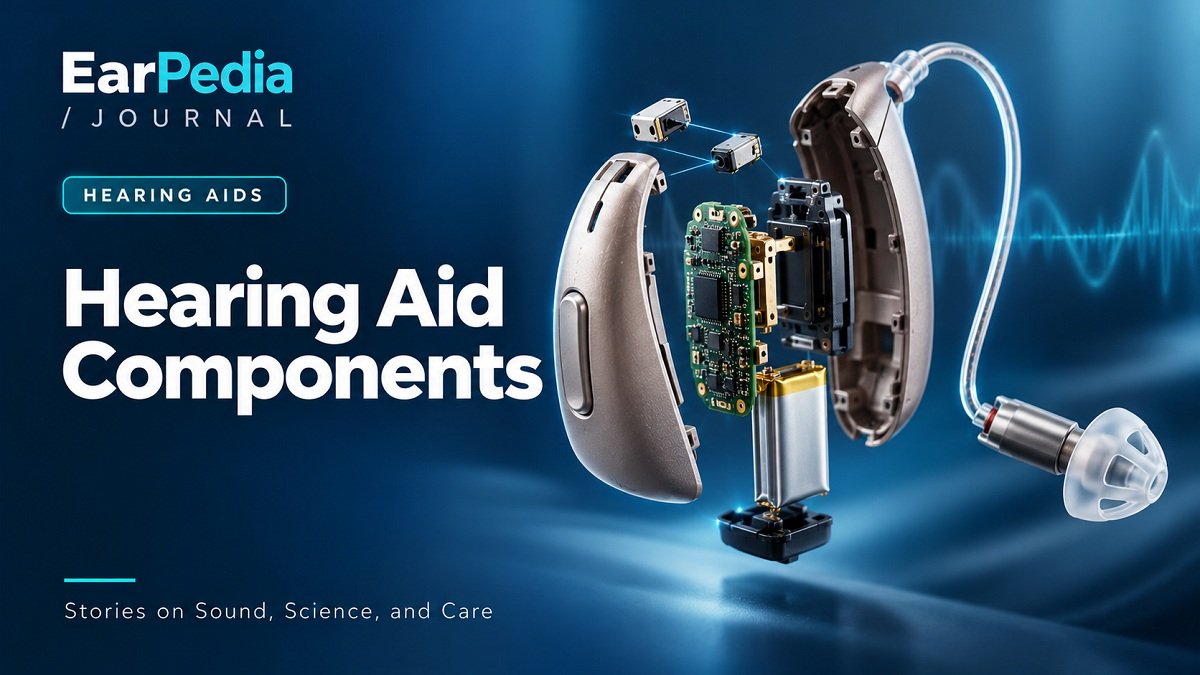
Hearing aids components
Introduction
Hearing aids have numerous essential components, each engineered to enhance and process sound for those with hearing impairment. Audiologists must possess a comprehensive understanding of these components to effectively recommend, fit, and troubleshoot hearing aids. Below is an analysis of the principal elements and their respective functions:
1. Microphone
- Function: The microphone picks up sound from the environment and converts it into electrical signals.
- Types:
- Omnidirectional Microphones: Pick up sound equally from all directions.
- Directional Microphones: Focus on sounds coming from specific directions, typically in front of the wearer. These help improve speech understanding in noisy environments.
- Importance for Audiologists: Selecting hearing aids with directional microphones can greatly improve the wearer’s ability to hear speech in noisy settings. Many modern hearing aids allow for automatic switching between omnidirectional and directional modes.
2. Amplifier/Digital Signal Processor (DSP)
- Function: The amplifier increases the strength of the sound signals picked up by the microphone, making them louder and clearer. In modern digital hearing aids, the DSP processes the sound to enhance clarity, reduce noise, and adjust frequencies based on the wearer’s hearing profile.
- Types:
- Analog: Amplifies sound without much customization or processing (rare in modern devices).
- Digital: Offers precise amplification, noise reduction, feedback suppression, and other advanced processing based on the wearer’s audiogram.
- Importance for Audiologists: The DSP allows audiologists to program hearing aids to match a patient’s unique hearing loss, providing individualized amplification and sound quality. The ability to customize these settings ensures that the hearing aid provides maximum benefit across different environments.
3. Receiver (Speaker)
- Function: The receiver converts the amplified electrical signals back into sound waves and delivers them into the ear.
- Location: In some hearing aids (e.g., RIC), the receiver is placed directly in the ear canal, while in others (e.g., BTE), the receiver is housed in the body of the hearing aid behind the ear.
- Importance for Audiologists: The receiver’s size and placement affect the sound quality and volume. Different receivers are used based on the degree of hearing loss. For severe hearing loss, a more powerful receiver may be needed.
4. Battery
- Function: Provides power to all the components of the hearing aid.
- Types:
- Disposable Zinc-Air Batteries: Common in most hearing aids, these come in four standard sizes: 10, 312, 13, and 675. The lifespan of these batteries ranges from 3 to 10 days depending on usage.
- Rechargeable Batteries: Many modern hearing aids now use built-in rechargeable lithium-ion batteries, offering convenience and environmental benefits. They typically last a full day on a single charge.
- Importance for Audiologists: Rechargeable hearing aids are often recommended for patients with dexterity issues or who prefer the convenience of not changing batteries frequently.
5. Volume Control
- Function: Allows the user to adjust the volume of the hearing aid manually, although many modern aids adjust automatically based on the listening environment.
- Importance for Audiologists: Not all patients need or want manual volume control. Audiologists can set hearing aids with automatic volume adjustment or include manual control for users who prefer it.
6. Earmold or Dome
- Function: This part directs the amplified sound into the ear canal. Earmolds are custom-made from impressions of the patient’s ear, while domes are pre-made, soft silicone tips.
- Importance for Audiologists: Earmolds are often used for BTE aids and patients with severe hearing loss. Proper fitting of the earmold or dome ensures comfort, sound quality, and feedback reduction. Audiologists may also choose open-fit domes for patients who benefit from natural sound entry.
7. Telecoil (T-Coil)
- Function: The telecoil picks up electromagnetic signals from compatible devices, such as loop systems in public venues (churches, theaters, etc.) and landline phones. These signals are converted into sound for the hearing aid user.
- Importance for Audiologists: For patients who attend venues equipped with loop systems or use landline phones frequently, hearing aids with telecoil options can significantly improve accessibility and sound clarity in those settings.
8. Programming Port/Wireless Connectivity
- Function: Audiologists use the programming port (or wireless connection in newer devices) to adjust hearing aid settings. This allows for the fine-tuning of sound quality and amplification levels to match the patient’s hearing loss profile.
- Importance for Audiologists: Modern hearing aids are often wirelessly programmable, enabling audiologists to adjust settings remotely or in real time during follow-up appointments. This provides greater flexibility and customization for the patient.
9. Ear Hook or Thin Tube
- Function: In BTE hearing aids, the ear hook or thin tube connects the hearing aid to the earmold or dome in the ear canal.
- Importance for Audiologists: Ear hooks are more durable and robust, often used for severe hearing loss. Thin tubes, used in open-fit hearing aids, provide a more discreet appearance and are suitable for mild to moderate loss.
10. Feedback Suppression System
- Function: Reduces or eliminates the annoying whistling sound (feedback) that can occur when amplified sound leaks out of the ear and is picked up by the microphone.
- Importance for Audiologists: Audiologists can adjust feedback suppression to ensure comfort and prevent unwanted noise. Proper fitting and careful programming minimize feedback.
11. Noise Reduction Technology
- Function: Reduces background noise and improves speech clarity by differentiating between speech and non-speech sounds.
- Importance for Audiologists: Patients who are frequently in noisy environments benefit from advanced noise reduction features. Audiologists can fine-tune this setting based on patient preferences and environments.
12. Bluetooth/Wireless Technology
- Function: Bluetooth connectivity allows the hearing aid to pair with smartphones, televisions, and other devices, enabling hands-free calling, music streaming, and direct audio input.
- Importance for Audiologists: Audiologists should consider Bluetooth-enabled hearing aids for tech-savvy patients who want seamless integration with their devices. This feature greatly enhances the user experience in modern life.
13. Wind Noise Reduction
- Function: Helps reduce the effects of wind blowing across the microphone, a common issue for those who spend time outdoors.
- Importance for Audiologists: Especially useful for patients who are outdoors frequently, such as golfers or hikers. Audiologists can adjust wind noise settings to improve clarity in these environments.
Summary
As an audiologist, comprehending these elements enables you to customize hearing aid recommendations according to each patient’s auditory requirements, lifestyle, and preferences. Appropriate programming, fitting, and subsequent care guarantee that the hearing aid operates well and fulfills the patient’s standards for auditory quality and comfort.

Discussion
0 Comments
No comments yet
Start the discussion with a question, reflection, or clinical perspective.
Leave a reply
Share a thoughtful response or ask a question about this article.