
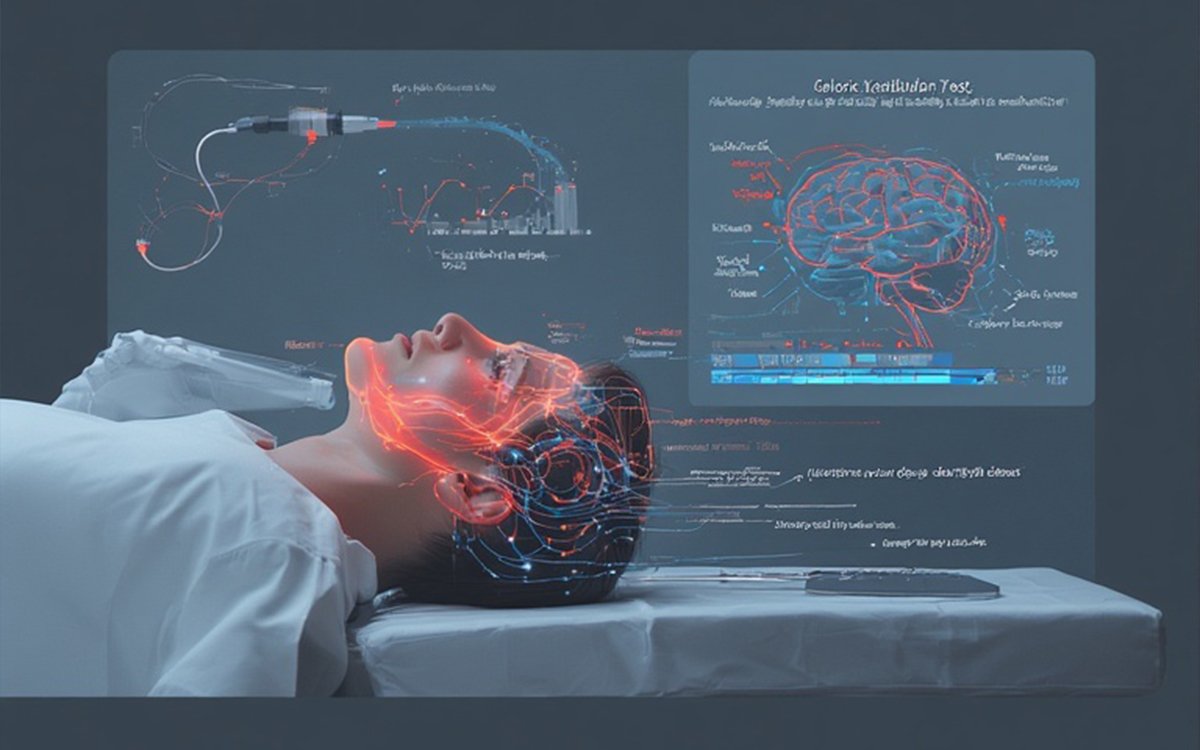
Dizziness and equilibrium disturbances are prevalent issues that prompt numerous people to seek medical attention in clinics throughout. These symptoms can be distressing and substantially impact daily living, rendering precise diagnosis imperative. The Caloric Test is one of the most dependable diagnostic procedures for evaluating vestibular function. This test offers essential insights into the causes of vertigo, imbalance, or spatial disorientation by analyzing the responses of each inner ear individually.
The Role of the Inner Ear in Maintaining Balance
The inner ear is commonly linked to auditory function; however, its contribution to equilibrium is of equal significance. The vestibular system in each ear has three fluid-filled semicircular canals. These canals sense rotational motions of the head in three dimensions. As the head moves, the fluid within the canals displaces, resulting in the bending of minute sensory hair cells. The hair cells then transmit electrical signals to the brain via the vestibular nerve.
The brain interprets these impulses to ascertain the head’s position and movement in relation to the body and surroundings. An impairment of the vestibular system results in the brain receiving erroneous information, potentially causing vertigo, imbalance, nausea, or coordination difficulties.
Understanding the Caloric Test
The Caloric Vestibular Test is intended to assess the functionality of each ear separately. The examination entails the introduction of warm or cold water or air into the auditory canal. The alteration in temperature modifies the density of the inner ear fluid, resulting in movement that mimics head rotation. The brain perceives this movement as genuine motion, prompting the eyes to move involuntarily in a distinctive pattern known as nystagmus.
Through meticulous observation of these ocular movements, physicians can assess the functionality of each vestibular system and detect any asymmetry between the ears.
The Connection Between Eye Movements and Balance
The Caloric Test emphasizes eye movements instead of directly assessing balance. This results from the vestibulo-ocular reflex (VOR), an innate mechanism that stabilizes vision during head movements. For instance, when ambulating while fixating on a stationary item, your eyes instinctively adjust to compensate for head movement, maintaining the object’s clarity.
In the Caloric Test, stimulation of one ear activates the vestibulo-ocular reflex (VOR), resulting in corresponding eye movement. Clinicians can evaluate the velocity, trajectory, and length of these movements to assess the integrity of the vestibular system. Irregularities in these responses may signify vestibular impairment, neural injury, or potential central nervous system involvement.
How the Caloric Test Is Conducted
The procedure is straightforward but requires careful technique:
- Patient Preparation
The patient lies on a comfortable bed with the head slightly elevated. Medications that could affect balance, such as sedatives or certain antihistamines, are usually paused before testing. - Ear Stimulation
Each ear is tested separately using warm or cold water or air. The temperature changes cause fluid movement in the semicircular canals, simulating head rotation. - Observation and Recording
Eye movements are tracked using video goggles or electrodes. This allows clinicians to capture detailed information on the direction, speed, and pattern of nystagmus. - Result Interpretation
Reduced or absent eye movements on one side indicate vestibular weakness. Comparing responses between the two ears helps detect asymmetries, which may suggest conditions like unilateral vestibular loss or inner ear disorders.
Conditions That Can Be Detected
The Caloric Test is particularly effective at identifying several vestibular issues:
- Unilateral vestibular weakness: One ear responds less effectively than the other, which may result from infection, trauma, or nerve damage.
- Bilateral vestibular loss: Both ears show reduced function, often leading to chronic imbalance or difficulty walking in low-light conditions.
- Central nervous system involvement: Certain abnormal patterns can indicate issues in the brainstem or cerebellum rather than the inner ear itself.
Advantages and Limitations
Benefits of the Caloric Test
- Evaluates each ear individually, revealing side-to-side differences.
- Provides objective and measurable data on vestibular function.
- Helps differentiate between peripheral and central causes of dizziness.
Limitations
- Patients may feel transient vertigo or nausea during testing.
- The test primarily assesses the horizontal semicircular canal and may not capture all vestibular abnormalities.
- Accurate interpretation requires experienced clinicians.
Patient Experience
Patients frequently describe experiencing a sensation of vertigo, despite the immobility of their head. This sensation is typically transient and dissipates rapidly following the examination. Effective communication prior to and during the examination can alleviate anxiety, facilitating patient relaxation and yielding more dependable results.
Modern Role of the Caloric Test
Notwithstanding advancements in vestibular assessment instruments, such as the video head impulse test (vHIT) and rotary chair testing, the Caloric Test continues to be a fundamental component of balance evaluation. Its capacity to isolate the function of each ear independently is unmatched, rendering it particularly advantageous for identifying unilateral vestibular disease. Furthermore, integrating Caloric Test outcomes with further vestibular assessments might provide clinicians with a holistic understanding of a patient’s balance system.
Instructions for Patients Before and After Testing
- Avoid alcohol, caffeine, and certain medications prior to the test if advised by your doctor.
- Ensure a light meal before the test, as fasting may worsen dizziness.
- Rest after testing, as temporary imbalance or nausea is common.
- Follow up with your clinician to review results and discuss next steps, which may include physical therapy or other treatments.
Conclusion
The Caloric Test is a crucial instrument for assessing dizziness and balance issues. By stimulating the inner ear and monitoring ocular movements, doctors can identify vestibular anomalies and differentiate between peripheral and central origins of imbalance.
Comprehending this assessment enhances patients’ confidence in the evaluation procedure. The Caloric Test, utilized independently or in conjunction with other vestibular evaluations, yields essential insights that inform effective therapy, enhance balance, and improve overall quality of life.
Leave a reply
Lets Talk.
Related Articles
31
Dec
Sound Therapy in Tinnitus
Introduction Tinnitus is among the most formidable conditions faced by audiologists. For certain patients, it constitutes a negligible background noise that may be disregarded. For some...
Know More >Introduction Tinnitus is not solely an auditory occurrence. Contemporary research increasingly characterizes it as a multisystem disorder encompassing cognitive, emotional, and physiological networks. Among the several...
Know More >30
Dec
Hearing Aids and Tinnitus
Introduction Tinnitus is a multifaceted auditory and neurological disorder defined by the perception of sound without an external source. Despite manifesting as ringing, buzzing, hissing, or...
Know More >
0 Comments
Leave a comment