
The precise diagnosis of vestibular dysfunction is crucial for comprehending and addressing dizziness, vertigo, and balance issues. These illnesses are prevalent and very debilitating, impacting millions of individuals globally and markedly diminishing quality of life. For numerous years, clinicians depended on conventional diagnostic techniques, including caloric irrigation, rotational chair assessments, and clinical bedside maneuvers. Although beneficial, these methodologies were constrained in their breadth. The assessments frequently evaluated only a portion of the vestibular system, caused discomfort for patients, and did not encompass the complete range of vestibular function across physiologically pertinent frequencies. In the past two decades, technological advancements have revolutionized this domain. Two significant contemporary innovations are the Video Head Impulse Test (vHIT) and Vestibular Evoked Myogenic Potentials (VEMPs). When utilized in conjunction, these procedures offer a holistic understanding of both semicircular canal and otolith functionality, signifying a transformative advancement in vestibular diagnostics.
The vestibular system comprises the semicircular canals and the otolith organs, both located in the inner ear. The semicircular canals perceive angular acceleration of the head, but the utricle and saccule detect linear acceleration and gravitational orientation. Data from these sensory organs is conveyed through the vestibular nerve to the brainstem and cerebellum, where it is synthesized with visual and proprioceptive information. This integration generates reflexes, including the vestibulo-ocular reflex (VOR), which stabilizes vision during head movement, and vestibulospinal reflexes, which aid in postural regulation. Age, illness, or trauma can impair these pathways, resulting in dizziness, instability, and confusion. Conventional vestibular assessments, such as caloric testing, provide merely a limited perspective on this system. Caloric stimulation of the lateral semicircular canal using warm or cold water or air evaluates low-frequency function that does not represent typical everyday activities. Rotary chair testing expanded this frequency range; nonetheless, it remained costly and restricted to semicircular canal functionality. Posturography yielded valuable insights into overall balance but failed to identify specific vestibular impairments. These constraints underscored the necessity for more sophisticated diagnostic instruments, facilitating advancements like vHIT and VEMPs.
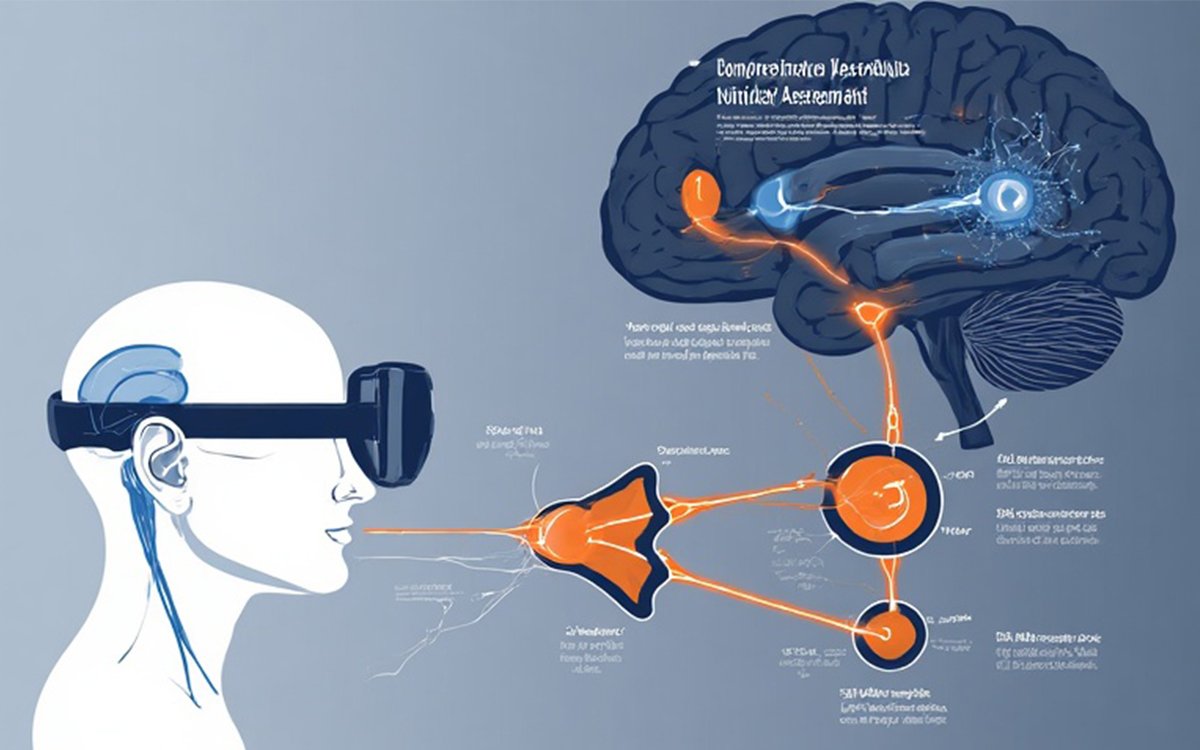
The Video Head Impulse Test has swiftly emerged as a pivotal instrument in contemporary vestibular diagnosis. The test assesses the ability of the eyes to sustain fixation on a target during quick, minor, and unpredictable head movements, in accordance with the vestibulo-ocular reflex principle. The process is straightforward: the patient dons lightweight goggles fitted with high-speed cameras, while the therapist administers rapid head impulses in multiple directions. The eyewear concurrently records ocular movements and cranial velocity. In a functional system, ocular motions precisely counterbalance cranial motion, resulting in a stable gaze. When vestibular function is compromised, the eyes are unable to maintain synchronization, resulting in the emergence of corrective “catch-up” saccades. These phenomena may be overt, observable to the human eye, or covert, transpiring too rapidly to be perceived without instruments. By detecting these irregularities, vHIT diagnoses semicircular canal hypofunction with great accuracy. In contrast to caloric testing, which assesses only low-frequency responses, vHIT evaluates high-frequency vestibular function across all six canals. This is especially significant, as the majority of natural head motions transpire at elevated frequency ranges. Clinically, vHIT has demonstrated sensitivity in identifying unilateral and bilateral vestibular deficits, assessing recovery following vestibular neuritis, and differentiating peripheral impairments from central lesions, in which the reflex is frequently maintained. Its rapidity, comfort, and impartiality render it particularly advantageous in bustling clinics and emergency environments.
While vHIT emphasizes semicircular canal functionality, VEMPs offer direct assessment of otolith activity, which was previously challenging to evaluate. Vestibular Evoked Myogenic Potentials are brief-latency responses obtained from muscles following vestibular stimulation. Two primary variations are employed in practice: cervical VEMPs (cVEMPs) and ocular VEMPs (oVEMPs). The cVEMP assesses inhibitory potentials from the sternocleidomastoid muscle in response to auditory or vibratory stimulation. It indicates the functionality of the saccular and vestibulospinal pathways. The oVEMP, conversely, assesses excitatory responses from the inferior oblique or other extraocular muscles, indicating the functionality of the utricular and vestibulo-ocular pathways. cVEMPs and oVEMPs collectively furnish complementing insights into otolith functionality and the reflexes they facilitate. These responses have been essential in the diagnosis of Ménière’s illness, superior semicircular canal dehiscence, bilateral vestibulopathy, and age-related otolith degeneration. For instance, individuals with superior semicircular canal dehiscence frequently exhibit abnormally low cVEMP thresholds, but those with presbyvestibulopathy may have absent or diminished responses attributable to the degeneration of otolith hair cells. VEMPs provide diagnostic insights into situations that were previously only indirectly inferred.
When analyzed collectively, vHIT and VEMPs provide a formidable diagnostic duo. Each mitigates the deficiencies of the other. vHIT assesses the semicircular canals, specifically in the physiologically significant high-frequency range, whereas VEMPs examine the otolith organs and their corresponding pathways. Calorics, rotary chair, and posturography are beneficial in some circumstances; nonetheless, they lack the precise, frequency-specific, and reflex-specific insights provided by contemporary techniques. This complementarity enables doctors to develop a fairly comprehensive profile of vestibular function, informing both diagnosis and rehabilitation strategies.
An expanding corpus of clinical evidence substantiates the diagnostic efficacy of these approaches. Research indicates that vHIT can identify vestibular hypofunction with sensitivities over 90 percent. Significantly, it can also distinguish peripheral lesions from central ones. Individuals with central vestibular diseases, such as stroke, may exhibit normal vHIT responses, while those with peripheral lesions display catch-up saccades and diminished VOR gain. VEMPs have exhibited a significant diagnostic yield across several illnesses. In superior semicircular canal dehiscence, VEMP thresholds are significantly diminished. In Ménière’s disease, VEMP responses may vary with disease activity, serving as a possible biomarker for monitoring. In presbyvestibulopathy, the amplitude of VEMP decreases with age, providing concrete evidence of otolith degradation. Extensive investigations have indicated that the integration of vHIT with VEMPs enhances diagnostic precision compared to each test individually. Collectively, they facilitate the earlier identification of vestibular disorders, enhance localization precision, and allow for more focused treatment.
In addition to diagnosis, these methods are progressively significant in assessing rehabilitation outcomes. Vestibular rehabilitation therapy tries to enhance central compensation for deficiencies through specific exercises. Progress can now be quantitatively assessed by monitoring enhancements in VOR gain via vHIT or by observing variations in VEMP amplitude and threshold. This enables clinicians to assess therapeutic efficacy over time and modify programs as necessary. Both patients and therapists gain from the objective feedback, which bolsters motivation and affirms progress.
Looking ahead, the future of vestibular testing is directly related to technological advancement. High-resolution three-dimensional vHIT devices are being developed, providing canal-specific data with unparalleled precision. Portable VEMP devices are being developed, facilitating bedside or home-based testing and enhancing accessibility in remote or resource-constrained environments. Artificial intelligence is poised to assume a greater role, utilizing algorithms that may autonomously analyze ocular or muscular responses, diminish interobserver variability, and expedite clinical operations. The incorporation of vestibular testing with modern imaging modalities like MRI and CT is forthcoming. By connecting anatomical and functional data, doctors can attain a more comprehensive understanding of vestibular disease. Structural evidence of canal dehiscence, along with aberrant VEMP values, offers robust confirmation of diagnosis and informs surgical decision-making. The capacity for big data analysis, which aggregates information from several patients, may enhance diagnostic criteria and uncover novel biomarkers for disease.
In conclusion, the advancement of vHIT and VEMPs has transformed vestibular diagnosis. Surpassing the constraints of conventional caloric and rotary chair assessments, these instruments deliver rapid, objective, and comprehensive data about both semicircular canal and otolith functionality. Their synergistic functions enable doctors to develop thorough diagnostic profiles, enhancing precision and efficacy. Clinical investigations constantly illustrate their significance in both diagnostic and rehabilitation monitoring. As technology progresses in three-dimensional measurement, mobility, artificial intelligence, and imaging integration, the significance of vHIT and VEMPs will continue to grow. These technologies guarantee that vestibular diagnostics align with the increasing demand for accurate, patient-centered therapy, thereby enhancing results and quality of life for patients with dizziness and balance issues.
Leave a reply
Lets Talk.
Related Articles
31
Dec
Sound Therapy in Tinnitus
Introduction Tinnitus is among the most formidable conditions faced by audiologists. For certain patients, it constitutes a negligible background noise that may be disregarded. For some...
Know More >Introduction Tinnitus is not solely an auditory occurrence. Contemporary research increasingly characterizes it as a multisystem disorder encompassing cognitive, emotional, and physiological networks. Among the several...
Know More >30
Dec
Hearing Aids and Tinnitus
Introduction Tinnitus is a multifaceted auditory and neurological disorder defined by the perception of sound without an external source. Despite manifesting as ringing, buzzing, hissing, or...
Know More >
0 Comments
Leave a comment