
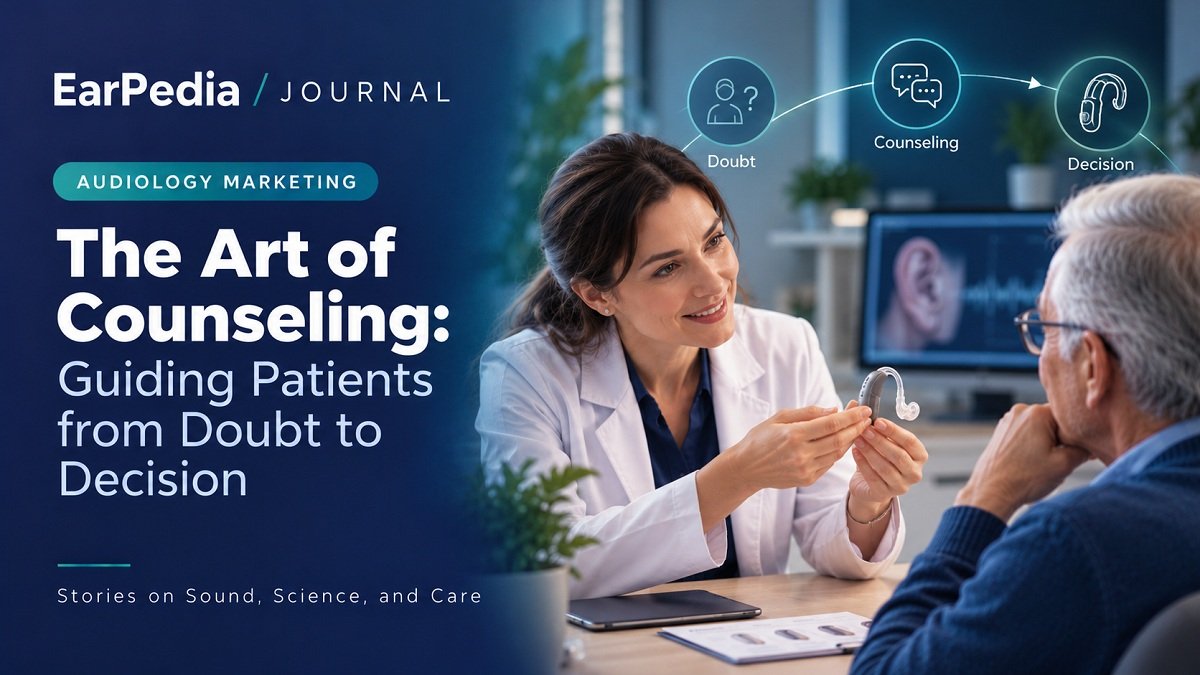
The Art of Counseling: Guiding Patients from Doubt to Decision
Effective counseling does not include persuasion. It involves comprehending, directing, and assisting patients in making informed decisions with assurance and lucidity.
Introduction: Why Counseling is the Core of Successful Audiology
Numerous audiologists consider counseling to be a subordinate aspect of their therapeutic practice. They perceive testing, fitting, and programming as the primary responsibilities, while viewing counseling as an ancillary activity that occurs intermittently. Counseling is fundamental to effective hearing treatment. It is a space where trust is established, misconceptions are clarified, emotions are managed, and decisions are rendered.
Regardless of the precision of your diagnosis or the sophistication of the technology you propose, inadequate counseling leads to patient hesitation. When counseling is robust, patients progress with clarity and dedication. Mastering counseling elevates your position from that of a mere evaluator or technician to that of a valued advisor.
Part 1: Understanding What Patients Bring to the Table
Effective counseling commences well in advance of providing any guidance. It begins with understanding the emotional and cognitive challenges that individuals face.
- Preconceived Beliefs
Patients may present preconceived notions on hearing loss and hearing aids influenced by acquaintances, media, or individual experiences. Some believe that hearing aids are ineffective. Some individuals contend that their hearing is relatively adequate. These convictions shape their interpretation of every word you utter. - Hidden Emotions
A significant number of people have had untreated hearing loss for years. Underlying their inquiries may be annoyance, humiliation, sorrow, or even denial. Many individuals have trepidation at the prospect of acquiring a hearing aid, perceiving it as a representation of aging or deterioration. - Information Gaps
Although the internet provides an abundance of information, a significant portion is either incomplete or erroneous. Patients frequently possess incomplete information, characterized by gaps and misconceptions that require careful clarification.
Your initial responsibility as a counselor is to reveal these levels. In the absence of this comprehension, your elucidations may be ineffective.
Part 2: Creating a Counseling Environment that Encourages Openness
The physical and emotional atmosphere of your clinic significantly influences patients’ receptiveness to counseling.
- Calm and Private Space
A quiet, comfortable space free of interruptions allows patients to speak freely. Counseling in noisy, rushed, or open areas can limit honesty. - Unhurried Presence
Patients can sense when you are mentally checking the clock. Give counseling the same importance and time you give to clinical procedures. - Respectful Tone
A respectful, empathetic tone encourages openness. Patients should feel they can express doubts without being dismissed or pressured.
When the environment is perceived as secure, patients disclose their authentic thoughts and emotions, providing the necessary information for effective guidance.
Part 3: The Structure of Effective Counseling Conversations
Although counseling should appear instinctive, a defined structure guarantees that critical topics are addressed without inundating the patient. A beneficial framework comprises four stages:
1. Explore
Commence by posing open-ended inquiries to examine the patient’s viewpoint. For instance:
- “Tell me about the situations where you notice the most difficulty.”
- “What have you heard about hearing aids from friends or family?”
- “How do you feel about the idea of using hearing technology?”
Pay close attention. Employ reflective statements to demonstrate comprehension. For instance, “It appears that cacophonous surroundings have become particularly difficult for you.” This phase involves revealing beliefs, emotions, and expectations.
2. Inform
Upon comprehending their viewpoint, provide precise and customized information. Refrain from inundating them with technical specifics. Concentrate on matters pertinent to their objectives and apprehensions. Utilize uncomplicated language and familiar illustrations. For instance:
- Rather than stating, “You have a moderate high-frequency sensorineural loss,” articulate, “You are unable to perceive softer speech sounds, such as consonants, which complicates speech comprehension, particularly in noisy environments.”
This phase involves providing the patient with the necessary knowledge to comprehend their experience.
3. Align
Align their objectives and apprehensions with the answers you provide. This is the juncture at which counseling transitions from general education to individualized guidance. For instance:
- “You indicated that family dinners have become exasperating.” Contemporary hearing aids can enhance speech perception in cacophonous environments, restoring enjoyment to those experiences.”
Alignment fosters motivation by linking solutions to personally significant results.
4. Support Decision-Making
Ultimately, assist the patient in arriving at a decision that resonates with their values. This may entail addressing objections, elucidating expectations, or providing a trial period. The essential principle is to foster their autonomy rather than exert pressure onto them. Patients who perceive themselves as making an informed, autonomous decision are far more inclined to adhere to the treatment and maintain long-term satisfaction.
Part 4: Communication Techniques that Make Counseling Powerful
Counseling is equally concerned with the manner of communication as it is with the content of communication. Mastering some essential strategies can significantly enhance the quality of your relationships.
- Active Listening
Show genuine interest through eye contact, nodding, and verbal acknowledgments. Repeat or summarize what the patient says to confirm understanding. - Empathic Reflection
Acknowledge emotional content as well as factual content. For example, “It sounds like you have been feeling isolated in social gatherings,” validates their experience. - Metaphors and Stories
Technical explanations are important, but metaphors and real-life stories are often more memorable. For example, comparing hearing aids to glasses helps normalize their use. - Gentle Correction of Misconceptions
Instead of bluntly contradicting misinformation, acknowledge their perspective and then offer accurate information. For example, “Many people have heard that hearing aids make everything louder, but modern devices actually focus on the sounds you want to hear.” - Balanced Authority
Present yourself as a knowledgeable guide rather than a salesperson. Confidence inspires trust, but humility and openness foster collaboration.
Part 5: Handling Common Counseling Challenges
Even proficient audiologists encounter persistent difficulties during counseling. Foreseeing this facilitates their management with ease.
- Patient Denial
Some patients minimize their difficulties. Gently use objective results and real-world examples to make the impact of hearing loss visible without confrontation. - Price Objections
Cost is a common barrier. Frame value in terms of outcomes, quality of life, and long-term benefits rather than features or price tags alone. - Fear of Change
Some patients fear becoming “dependent” on hearing aids. Normalize these feelings and explain the adaptive process clearly. - Information Overload
Avoid giving too much information at once. Break it into manageable steps and use written or visual materials to reinforce key points. - Family Dynamics
Family members may dominate conversations or express conflicting views. Involve them appropriately, but keep the patient’s voice central.
Part 6: Building Long-Term Trust Through Counseling
Counseling is not a singular occurrence. It is an ongoing procedure that fortifies your relationship with patients over time. Here are methods to maintain this trust:
- Consistent Messaging Across Appointments
Ensure that what you say during the first consultation aligns with what you reinforce during follow-ups. Consistency builds credibility. - Proactive Follow-Up
Reach out after key appointments to check in. This shows care and helps address issues early. - Patient Education Over Time
Provide ongoing education about hearing health and technology updates. An informed patient is more engaged and loyal. - Encouraging Questions
Create a culture where patients feel comfortable asking questions at any time. This deepens their understanding and involvement. - Celebrating Milestones
Acknowledge progress, such as successful adaptation to hearing aids or improved communication at work. Celebrating small wins reinforces motivation.
Part 7: Counseling as a Professional Skill
Counseling is not merely an acquired skill developed over time. It is a professional competency that can and should be intentionally cultivated and enhanced. Consistently evaluate your counseling sessions. Solicit evaluations from peers. Engage in role-playing or participate in programs centered on communication and therapy. As you enhance this skill, your work will become increasingly effective and fulfilling.
Conclusion: Guiding, Not Persuading
Effective counseling does not entail persuading patients to adopt your advice. The focus is on navigating people through ambiguity with compassion, lucidity, and proficiency. When patients see that they are heard, comprehended, and supported, they make decisions that are appropriate for them. This results in improved outcomes, enhanced connections, and a more gratifying professional practice for you.
Mastering the skill of advising distinguishes a competent audiologist from an outstanding one. It converts every interaction into a chance for transformation, benefiting both the patient and the practice.



Discussion
0 Comments
No comments yet
Start the discussion with a question, reflection, or clinical perspective.
Leave a reply
Share a thoughtful response or ask a question about this article.