
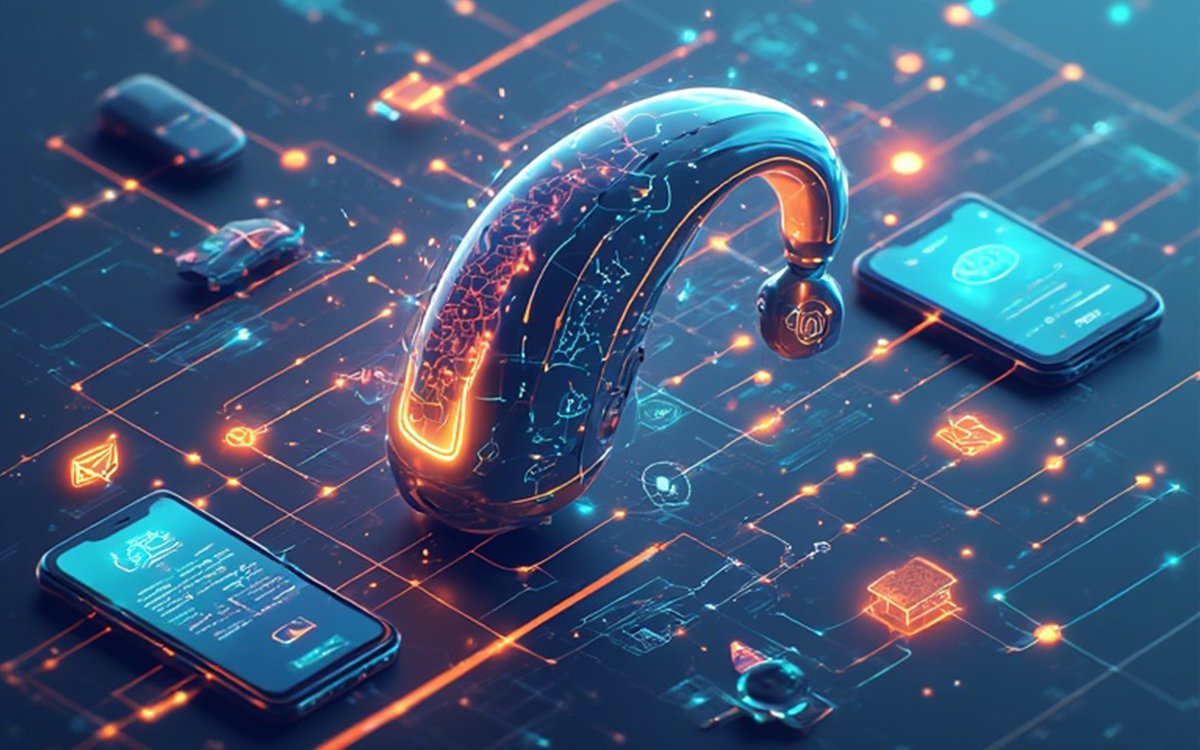
Hearing loss is one of the most prevalent sensory disorders worldwide, impacting hundreds of millions of people across all age demographics. Recent worldwide health estimates indicate that more than 460 million individuals experience disabling hearing loss, with projections suggesting a significant increase by 2050. The ramifications of unaddressed hearing impairment extend beyond reduced auditory perception; they include social isolation, cognitive deterioration, depression, and an increased risk of dementia. For decades, hearing aids have been the principal solution to these issues, facilitating efficient communication and sustaining social involvement. Nonetheless, the technological advancement of hearing aids has transcended mere incremental enhancements in amplification. Contemporary technologies increasingly incorporate intelligent, adaptive systems, merging artificial intelligence (AI) with user-centered design to deliver highly individualized aural experiences. These advancements have evolved hearing aids from basic assistance devices into advanced wearable computers that can learn and adapt with their users.
The evolution of hearing aids reflects a significant transition from rudimentary analog amplification to sophisticated digital devices that offer selective and context-sensitive sound processing. Early hearing aids were primitive; they amplified sound indiscriminately, failing to differentiate between speech and background noise, and provided a limited dynamic range that frequently resulted in user dissatisfaction. The emergence of digital signal processing (DSP) in the late 20th century was a major accomplishment. Digital hearing aids incorporated functionalities such as selective amplification, multi-band compression, and noise reduction customized to the user’s audiogram. Directional microphones improved the capacity to concentrate on certain sound sources, while sophisticated algorithms facilitated precise frequency shaping and dynamic range management. These developments substantially enhanced clarity and speech intelligibility, establishing digital hearing aids as both effective and adaptable.
The combination of connection, artificial intelligence, and mobile technology has advanced hearing aids into a new era in the 21st century. Modern devices often feature Bluetooth and wireless connectivity, facilitating effortless integration with smartphones, tablets, and many digital platforms. Users may now stream music, phone conversations, and media directly to their hearing aids, while firmware upgrades and remote adjustments guarantee that devices stay current with the latest functionalities. In addition to convenience, connectivity enables therapists to oversee device functioning, modify settings remotely, and gather longitudinal data on user behavior. These characteristics have transformed hearing aids from medical equipment into lifestyle technology that enhances freedom and daily functioning.
The incorporation of artificial intelligence has been a transformational advancement in hearing aid technology. AI systems analyze intricate auditory settings instantaneously, differentiating speech from ambient noise with unparalleled precision. These systems may learn from user behavior and adapt to various acoustic environments, including bustling restaurants, reverberant lecture halls, or outdoor settings. By identifying patterns in environmental sounds and human reactions, AI facilitates context-sensitive amplification that mitigates hearing fatigue and improves overall comfort. Contemporary hearing aids can autonomously modify directional microphones to concentrate on spoken dialogue, mitigate wind noise in outdoor settings, and enhance gain and compression according to real-time auditory stimuli. When integrated with cloud connectivity and mobile applications, these gadgets enable audiologists to examine real-world auditory data, thereby enhancing the fitting and customization process. This integration of human proficiency with machine learning illustrates a transition towards precision audiology, wherein gadgets not only enhance sound but also comprehend and predict the user’s requirements.
Personalization in hearing aid fitting has become a vital element in attaining optimal results. Conventional fitting techniques predominantly depend on audiometric data, usually represented as pure-tone thresholds, to establish amplification levels. This method evaluates auditory sensitivity but frequently neglects the complexities of real-world listening difficulties, including speech comprehension in noisy settings, personal loudness perception, and cognitive processing capabilities. As a result, two persons with almost identical audiograms may exhibit significantly divergent levels of enjoyment with the same gadget. Contemporary hearing aids tackle this issue by integrating learning algorithms that monitor user activities over time. Devices can track modifications to programs, listening duration in diverse situations, and feedback patterns via connected smartphone applications. Using this information, hearing aids adapt automatically, fine-tuning gain, compression, and noise reduction to align with the user’s preferences. Clinicians remain central to this process, interpreting data and providing guidance, while the device continuously evolves, effectively transforming the user into an active participant in their auditory rehabilitation.
The integration of hearing aids into the Internet of Things (IoT) further expands their functionality and potential impact. IoT-enabled devices can interact with smart home systems, automobiles, and wearable health monitors, creating interconnected ecosystems that respond to the user’s environment and physiological state. For instance, a hearing aid could automatically adjust its settings based on the user’s location, time of day, or ambient noise conditions. By combining auditory data with physiological signals, such as heart rate or motion, these devices can contextualize listening experiences and provide a comprehensive picture of overall well-being. For clinicians, this continuous data flow offers unprecedented insights into device performance and user needs, facilitating remote monitoring and tele-audiology services. As healthcare increasingly embraces virtual care models, IoT-enabled hearing aids serve as scalable tools for providing personalized, high-quality care outside of traditional clinic settings.
User-centered design is a crucial element in the effective adoption of hearing aids. Comfort, aesthetic appeal, and usability significantly influence whether individuals consistently wear their devices, particularly among first-time users and older adults. Advances in ergonomic materials, rechargeable battery systems, and discreet in-ear configurations have improved compliance and satisfaction, while intuitive interfaces and smartphone integration enhance user control. It is equally essential to address psychological and social problems, including perceived stigma. Studies demonstrate that aesthetically pleasing and user-friendly devices enhance users’ confidence, social interaction, and general quality of life. Clinicians play a critical role in educating patients about these options and in facilitating an experience that combines functional benefit with psychological comfort.
Notwithstanding the significant technological advancements, obstacles remain. Although AI-driven noise suppression and speech enhancement have advanced significantly, performance in highly dynamic or unpredictable environments remains imperfect. Battery life and device cost continue to limit accessibility for many users. Additionally, the incorporation of AI introduces complex ethical considerations, including data privacy, informed consent, and potential algorithmic bias. If AI systems are trained on non-representative datasets, they may perform inconsistently across diverse populations, potentially exacerbating disparities in care. Furthermore, excessive automation can risk diminishing user autonomy if devices override personal preferences. Developers and clinicians must balance the benefits of intelligent adaptation with the preservation of user control, ensuring that technology enhances rather than constrains the hearing experience.
The future of hearing aids extends into the realm of cognitive and adaptive technologies. Cognitive hearing aids aim to transcend traditional amplification, incorporating the ability to detect and respond to the listener’s attention, cognitive state, and mental workload. By integrating biosensors and physiological monitoring, future devices could dynamically prioritize sounds of interest, mimic natural auditory attention, and adjust for fatigue or mental effort in real time. Such capabilities promise to create seamless extensions of human perception, allowing users to engage more fully with their environment and social interactions. Additionally, the combination of hearing aids with augmented reality and spatial audio technologies could offer immersive auditory experiences that support both communication and environmental awareness, positioning these devices as tools for cognitive augmentation as well as auditory rehabilitation.
Looking ahead, the trajectory of hearing aid technology reflects broader trends in healthcare, moving from standardized interventions toward precision medicine. In this context, the role of audiologists evolves from simple device fitting to orchestrating comprehensive auditory ecosystems that integrate clinical insight, user feedback, and real-world data. Collaboration between clinicians, engineers, and data scientists will be essential to maintain both scientific rigor and ethical integrity, ensuring that advances benefit all users equitably. Research priorities should focus on multimodal integration, combining acoustic, cognitive, and physiological inputs to model the complete hearing experience.
In conclusion, the evolution of hearing aid technology represents a profound shift in both capability and philosophy. From early analog amplifiers to today’s intelligent, connected, and AI-enabled devices, hearing aids have transformed into adaptive systems that interact with users and their environments. For audiologists and ENT specialists, these advancements necessitate a redefinition of professional roles, emphasizing long-term collaboration, data interpretation, and ethical stewardship.
Discussion
0 Comments
No comments yet
Start the discussion with a question, reflection, or clinical perspective.
Leave a reply
Share a thoughtful response or ask a question about this article.