
Introduction
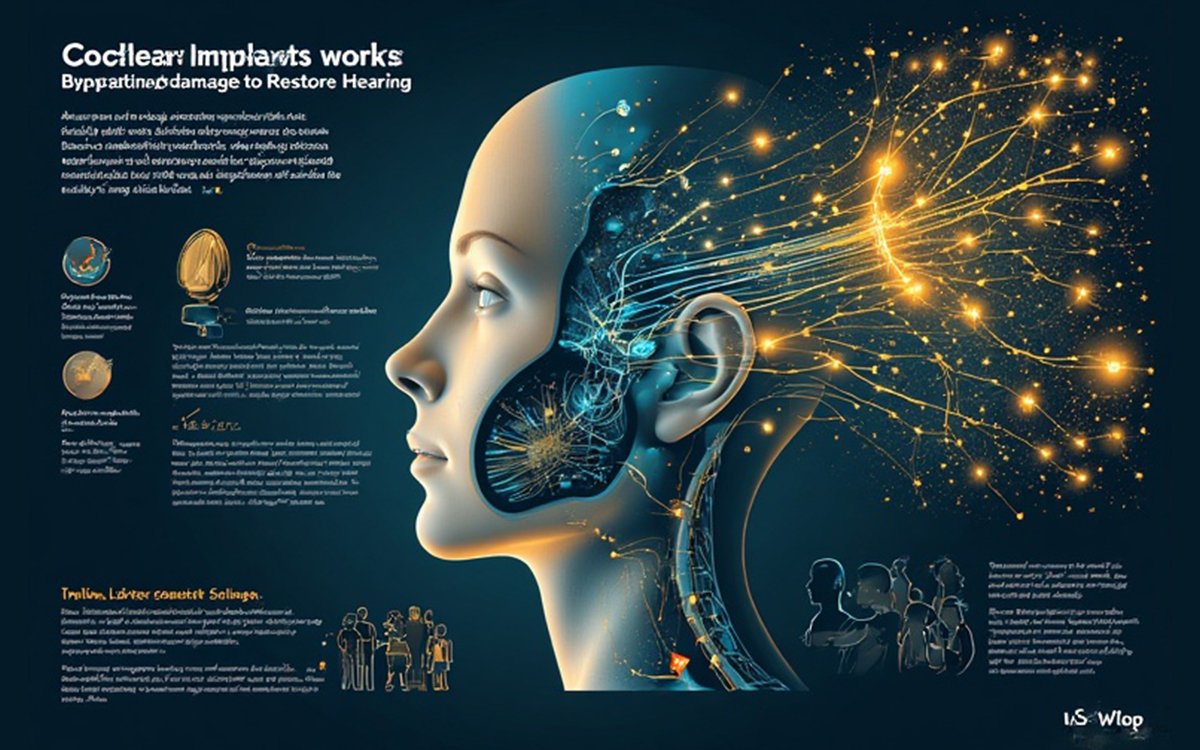
Cochlear implants (CIs) constitute a paramount advancement in contemporary audiology and otology. Cochlear implants, in contrast to traditional hearing aids that enhance sound, directly activate the auditory nerve, circumventing impaired sensory hair cells in the cochlea. Since its initial clinical application in the 1970s, advancements in technology, surgical methodologies, and patient criteria have established cochlear implantation as a routine treatment for persons with severe-to-profound sensorineural hearing loss. For audiologists and hearing health providers, comprehending the mechanics, eligibility criteria, and clinical considerations is crucial for achieving the best patient outcomes.
This article offers a detailed, professional examination of the functionality of cochlear implants, the individuals who may gain from them, and the prevailing candidacy criteria for both pediatric and adult demographics.
Mechanism of Action
Normal Hearing Physiology
In a functional auditory system, sound waves enter the external ear, vibrate the tympanic membrane, and are sent through the ossicles to the cochlea. In the cochlea, inner hair cells convert mechanical vibrations into neurological impulses by activating the hearing nerve. The auditory cortex in the brain subsequently interprets these impulses.
Pathophysiology of Hearing Loss
In several individuals with sensorineural hearing loss, the inner hair cells of the cochlea are either damaged or absent. Despite robust amplification, the auditory nerve receives inadequate stimulation, resulting in suboptimal speech discrimination and restricted functional hearing.
How Cochlear Implants Work
Cochlear implants circumvent impaired cochlear hair cells and directly activate the auditory nerve fibers via electrical impulses. The implant system comprises:
- External components:
- Microphone: Captures sound from the environment.
- Speech processor: Digitally analyzes and codes sound into specific signals.
- Transmitter coil: Sends coded signals through the skin to the internal receiver.
- Internal components:
- Receiver/stimulator: Implanted beneath the skin, receives information from the transmitter.
- Electrode array: Inserted into the cochlea, delivering electrical stimulation directly to the auditory nerve fibers.
The brain perceives these electrical impulses as sound. Through training and rehabilitation, the majority of recipients enhance their speech comprehension and communication skills.
Indications for Cochlear Implantation
Cochlear implants are advised for persons with moderate to profound sensorineural hearing loss who gain little or no benefit from conventional hearing aids. The manifestations differ slightly between adults and children.
Adult Indications
- Severe-to-profound sensorineural hearing loss in both ears (typically thresholds ≥70 dB HL).
- Limited benefit from hearing aids, defined as aided open-set sentence recognition scores of ≤50–60% in the ear to be implanted.
- Motivation and realistic expectations, as outcomes vary and require rehabilitation.
- Medically suitable for surgery, with no contraindications such as active middle ear infections or cochlear ossification preventing electrode insertion.
Pediatric Indications
- Children 9–12 months or older with bilateral severe-to-profound sensorineural hearing loss.
- Minimal benefit from appropriately fitted hearing aids, usually assessed over a 3–6 month trial.
- Early intervention is critical: younger implantation generally leads to better language and speech outcomes due to neural plasticity.
- Parental commitment to post-implant rehabilitation and auditory-verbal therapy.
Off-label and Special Populations
- Single-sided deafness (SSD) and asymmetric hearing loss: Increasing evidence supports implantation in SSD to improve sound localization, speech in noise, and tinnitus suppression.
- Hybrid implants: Combine acoustic amplification with electrical stimulation for patients with preserved low-frequency hearing.
- Elderly adults: Research demonstrates substantial benefits even in older populations when appropriately selected.
Candidacy Evaluation
The examination for cochlear implant candidacy is a multidisciplinary procedure that includes audiologists, otolaryngologists, speech-language pathologists, and occasionally psychologists. The assessment generally comprises:
- Audiological Assessment
- Pure tone audiometry.
- Aided speech recognition testing.
- Tympanometry and acoustic reflexes.
- Trial with appropriate hearing aids to document limited benefit.
- Medical and Imaging Assessment
- CT and/or MRI of the temporal bone to evaluate cochlear anatomy, nerve integrity, and presence of anomalies (e.g., cochlear ossification, malformations).
- General medical evaluation for surgical suitability.
- Speech and Language Evaluation
- Baseline assessment of speech and language development, especially important in pediatric candidates.
- Counseling and Expectations
- Education of patients and families regarding expected outcomes, rehabilitation needs, and limitations.
- Discussion of potential risks and complications.
Contraindications
Absolute contraindications include:
- Absence of the cochlear nerve (e.g., in cochlear nerve aplasia).
- Severe medical comorbidities making surgery unsafe.
- Active middle ear infections that cannot be controlled.
Relative contraindications may include:
- Cochlear malformations.
- Ossification following meningitis (though early implantation may allow partial insertion).
- Poor motivation or unrealistic expectations.
Surgical Considerations
Cochlear implant surgery is typically performed under general anesthesia and involves:
- Mastoidectomy and posterior tympanotomy to access the cochlea.
- Creation of a cochleostomy or round window insertion for the electrode array.
- Fixation of the receiver-stimulator in a bone bed beneath the skin.
- Closure and healing, followed by external component fitting after several weeks.
Complications are rare but may encompass facial nerve damage, infection, device malfunction, and vestibular problems.
Outcomes and Prognosis
Speech Perception and Communication
- Adults: Most experience significant improvements in speech understanding within months of implantation, though outcomes depend on factors such as duration of deafness and pre-implant hearing history.
- Children: Early implantation provides the best chance for near-normal language acquisition. Many children implanted before age 2 develop spoken language skills comparable to hearing peers.
Quality of Life
A multitude of research demonstrates enhancements in social engagement, educational involvement, employment opportunities, and general quality of life.
Variability
Results vary across patients. Factors associated with improved results encompass reduced time of deafness, regular device utilization, active engagement in rehabilitation, and conducive settings.
The Role of Audiologists and Professionals
Audiologists and hearing health professionals play a central role in every stage of cochlear implantation:
- Pre-implant evaluation: Performing audiological assessments, counseling, and candidacy documentation.
- Intraoperative support: Assisting with electrophysiological testing and intraoperative monitoring.
- Post-implant care: Programming (mapping) the device, monitoring auditory progress, and providing rehabilitation support.
- Long-term follow-up: Ensuring device functionality, making programming adjustments, and guiding patients through auditory training.
Future Directions
Progress in cochlear implant technology consistently enhances patient outcomes:
- Smaller, more efficient processors with better battery life.
- Improved electrode designs to preserve residual hearing.
- Robotics and minimally invasive surgery for precise electrode placement.
- AI-driven speech processors that adapt to complex listening environments.
- Expansion of candidacy to patients with milder hearing loss and SSD.
Conclusion
Cochlear implants have transformed the management of severe-to-profound hearing loss, reinstating communicative capacity and enhancing quality of life for hundreds of thousands globally. For audiologists and hearing health specialists, a thorough comprehension of the mechanisms, eligibility criteria, and interdisciplinary care necessities is essential. Ongoing technological and surgical advancements offer enhanced accessibility and superior auditory results for people throughout their lives.

Discussion
0 Comments
No comments yet
Start the discussion with a question, reflection, or clinical perspective.
Leave a reply
Share a thoughtful response or ask a question about this article.