
Introduction
Tinnitus, the auditory perception of sound absent an external source, impacts millions globally and is among the most prevalent issues in audiology clinics. For many individuals, it may be a trivial annoyance, whilst for others, it can profoundly disrupt sleep, concentration, emotional health, and general quality of life.
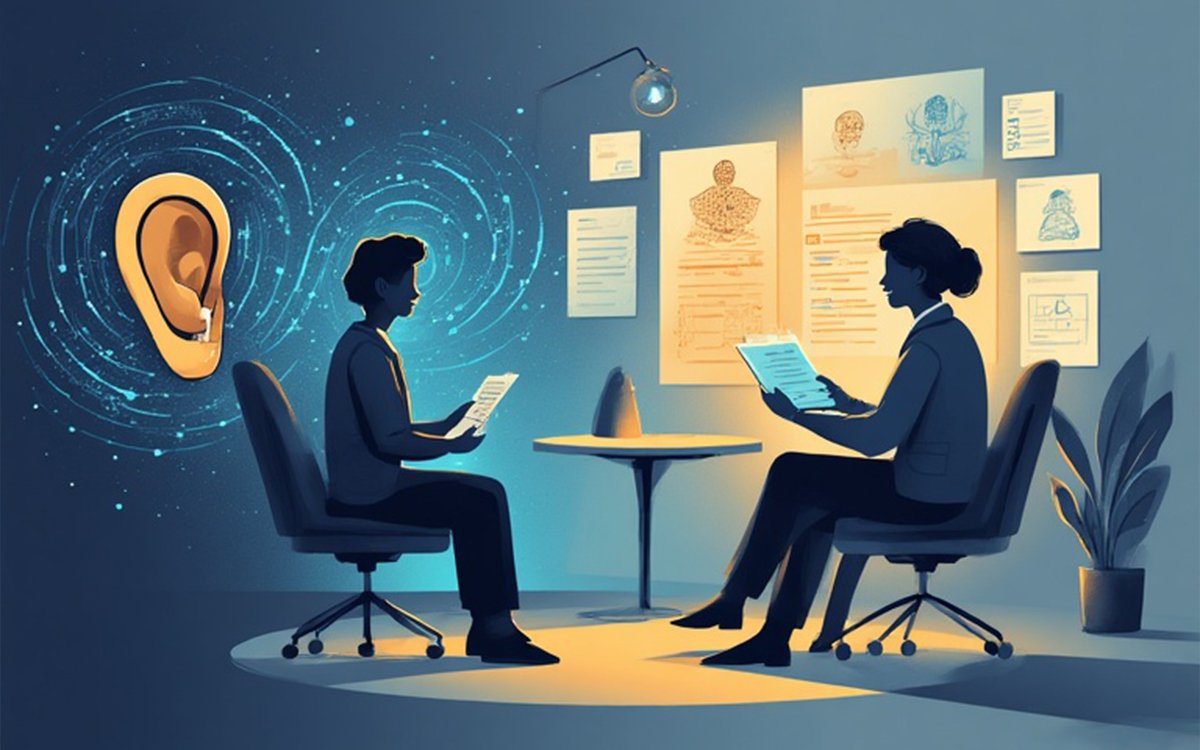
Consequently, effective management is necessary. In contrast to acute medical disorders, chronic tinnitus never resolves on its own and necessitates multifaceted, personalized treatment approaches. Audiologists, as the principal experts in auditory health, are distinctly qualified to spearhead tinnitus management via examination, counseling, sound therapy, and collaboration with psychiatric and medical services.
This article offers a thorough examination of evidence-based management options, encompassing counseling, sound therapy, cognitive-behavioral methods, pharmaceutical adjuncts, and novel experimental interventions. Practical information is underscored for incorporation into clinical practice.
Keywords: tinnitus management, tinnitus treatment, sound therapy, CBT, audiology, patient-centered care
- Principles of Tinnitus Management
1.1 Patient-Centered Care
Successful tinnitus management starts with understanding the patient’s perception and experience. Every individual experiences tinnitus differently, influenced by:
- Intensity and type of tinnitus sound (ringing, buzzing, hissing, or pulsatile)
- Duration and onset
- Impact on daily life, including work, social interactions, and emotional state
- Comorbidities such as hearing loss, anxiety, depression, or insomnia
Audiologists must set pragmatic expectations, highlighting that the eradication of tinnitus is frequently unattainable, although alleviation of distress and enhancement of functionality are feasible objectives.
1.2 Multimodal Approach
Tinnitus seldom yields to a solitary treatment. Evidence endorses a multimodal approach:
- Counseling and education – reduces fear and maladaptive attention
- Sound therapy – includes hearing aids, masking, and enriched sound environments
- Psychological interventions – cognitive-behavioral therapy (CBT), mindfulness, relaxation
- Management of comorbidities – sleep, anxiety, depression
- Medical or experimental interventions – pharmacological support, neuromodulation in select cases
A stepwise, individualized approach ensures that interventions are both effective and sustainable.
- Counseling and Patient Education
2.1 Informational Counseling
Education is fundamental to tinnitus management. Patients gain advantages from comprehension:
- Tinnitus is a symptom, not a disease
- Chronic tinnitus involves auditory system plasticity and limbic system engagement
- Management aims to reduce distress and improve coping, not necessarily eliminate the sound
Research repeatedly demonstrates that structured therapy alone can markedly diminish patient anxiety and enhance perceived control over tinnitus.
2.2 Coping Strategies
Patients ought to be instructed in behavioral methodologies:
- Avoiding prolonged silence and creating a background sound environment
- Engaging in quiet periods to practice relaxation
- Using mindfulness or attention-diversion techniques to reduce hypervigilance
- Identifying and minimizing triggers (stress, fatigue, caffeine, loud noise)
Counseling must be personalized and conducted repeatedly as necessary to reinforce skills.
- Sound-Based Interventions
3.1 Hearing Aids
Hearing aids are frequently the primary therapy for those with simultaneous hearing loss:
- Amplification reduces tinnitus prominence relative to environmental sounds
- Improves communication and auditory input, counteracting central auditory deprivation
- Modern devices include tinnitus masking programs, customizable by frequency and intensity
Hearing aids may partially alleviate tinnitus perception and enhance quality of life, especially in older individuals with mild to moderate hearing impairment.
3.2 Sound Generators and Masking
Sound treatment delivers external auditory stimuli to diminish tinnitus perception:
- Noise maskers: white, pink, or narrowband noise
- Music or environmental sounds: ocean waves, rainfall, wind
- Delivered via wearable devices, hearing aids, or smartphone apps
Evidence indicates that the combination of sound treatment and counseling is more successful than sound therapy in isolation. The objective is not complete concealment but diminished awareness and discomfort.
3.3 Frequency-Specific and Notched Sound Therapy
Advanced techniques aim at specific frequencies of tinnitus:
- Notched music therapy reduces cortical overrepresentation of the tinnitus frequency
- Tailored sound enrichment addresses hearing loss regions adjacent to the tinnitus frequency
These methodologies show potential for individuals with tonal tinnitus; however, substantial evidence is still forthcoming.
- Psychological and Behavioral Interventions
4.1 Cognitive Behavioral Therapy (CBT)
Cognitive Behavioral Therapy (CBT) is the most empirically validated psychological intervention for chronic tinnitus:
- Reframes negative thoughts and reduces catastrophizing
- Modifies attention and emotional responses to tinnitus
- Reduces distress, anxiety, depression, and sleep disturbances
- Can be delivered individually, in groups, or online
Meta-analyses demonstrate that cognitive-behavioral therapy enhances quality of life, irrespective of its effect on tinnitus intensity.
4.2 Mindfulness-Based Stress Reduction (MBSR)
Mindfulness teaches patients to observe tinnitus without judgment:
- Focused breathing and meditation
- Body scans to detect tension patterns
- Encourages emotional detachment from tinnitus
Clinical investigations indicate that mindfulness alleviates tinnitus-related distress, enhances coping mechanisms, and serves as a complement to cognitive behavioral therapy (CBT).
4.3 Relaxation and Biofeedback
Stress exacerbates tinnitus perception:
- Progressive muscle relaxation reduces somatic tension
- Guided relaxation programs aid habituation
- Biofeedback monitors physiological responses (heart rate, muscle tension)
Integrating relaxation with sound therapy and counseling enhances patient outcomes.
- Pharmacological and Adjunctive Interventions
5.1 Medications
There are no FDA-approved treatments specifically for tinnitus; however, certain therapies may address associated comorbidities.
- SSRIs or tricyclic antidepressants for anxiety/depression
- Short-term anxiolytics for acute distress
- Sleep aids for insomnia related to tinnitus
Medications serve as adjuncts rather than cures and must be utilized with caution.
5.2 Neuromodulation and Experimental Therapies
Novel methodologies seek to regulate brain circuits:
- Transcranial magnetic stimulation (TMS) – reduces cortical hyperactivity
- Transcranial direct current stimulation (tDCS) – alters neural excitability
- Bimodal stimulation – combines auditory and somatosensory inputs for plasticity
At present, these are utilized at specialist centers and in research studies.
- Integrating Interventions into Clinical Practice
6.1 Individualized Treatment Planning
Each patient’s management plan should consider:
- Tinnitus severity and impact
- Hearing status and age
- Psychological and cognitive profile
- Lifestyle, preferences, and motivation
6.2 Stepwise Approach
- Comprehensive assessment and counseling
- Sound therapy (hearing aids, generators)
- Psychological interventions (CBT, mindfulness)
- Medical management of comorbidities
- Experimental interventions for refractory cases
6.3 Monitoring and Follow-Up
- Regular assessment with validated tools (THI, TFI, visual analog scales)
- Adjust interventions based on progress and feedback
- Continuous reinforcement of coping strategies and sound therapy
- Key Takeaways for Audiologists
- Tinnitus management requires a multimodal, patient-centered approach
- Counseling and education are essential first steps
- Hearing aids and sound therapy reduce perceived tinnitus intensity
- Psychological strategies (CBT, mindfulness) reduce distress and improve coping
- Pharmacological or experimental approaches are adjunctive
- Stepwise, individualized plans with regular follow-up optimize outcomes
Conclusion
Although chronic tinnitus cannot be uniformly eradicated, audiologists can markedly enhance patient quality of life with evidence-based therapies. The integration of counseling, sound therapy, psychological techniques, and management of comorbidities yields optimal clinical outcomes.
Equipping patients with information, coping mechanisms, and continuous support is fundamental to effective tinnitus care.
Discussion
0 Comments
No comments yet
Start the discussion with a question, reflection, or clinical perspective.
Leave a reply
Share a thoughtful response or ask a question about this article.