
Vestibular disorders are among the most debilitating medical conditions, impacting millions globally. Patients frequently exhibit dizziness, instability, confusion, and compromised movement. These symptoms not only impair daily functioning but also lead to social isolation, diminished autonomy, and a decreased quality of life. Conventional vestibular rehabilitation therapy has been acknowledged as an efficacious, evidence-supported method for addressing these issues. Clinicians can enhance patients’ gaze stability, balance, and overall mobility by prescribing exercises that foster central compensation and neuroplasticity. Notwithstanding its efficacy, compliance with traditional vestibular rehabilitation continues to pose a significant issue. Numerous patients perceive the repeated nature of exercises as tedious, while others become disheartened by ongoing dizziness or the apprehension of falling during practice. These obstacles diminish adherence and undermine therapeutic results.
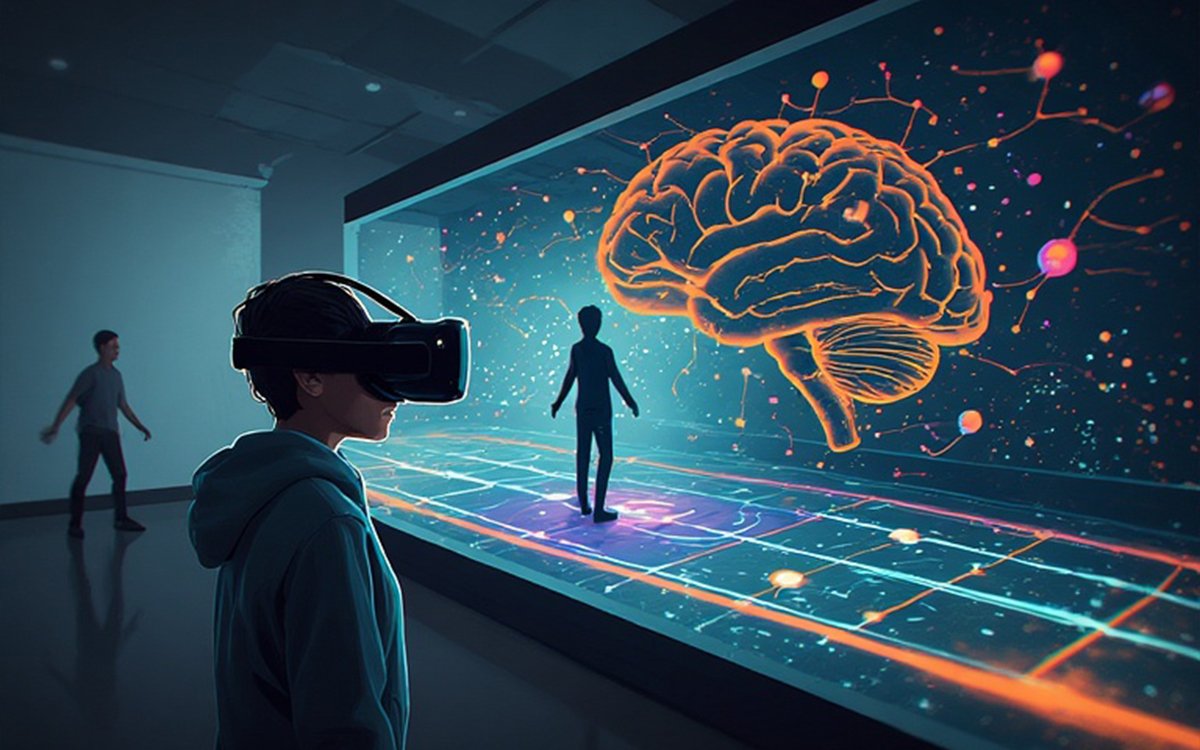
In the past decade, virtual reality (VR) has arisen as a revolutionary instrument capable of surmounting numerous constraints. Virtual reality technology generates immersive, interactive worlds that interest patients in ways that conventional methods cannot. VR platforms utilize head-mounted displays, motion sensors, and advanced software to deliver regulated multimodal stimulation that tests the vestibular system while ensuring a secure training environment. Patients can rehearse ambulation on irregular surfaces, ascending stairs, or maneuvering through congested areas without encountering the actual danger of falling. This regulated exposure promotes habituation, diminishes fear, and expedites adaption, rendering rehabilitation both safer and more encouraging.
The justification for integrating VR into vestibular rehabilitation is its distinctive capacity to simulate real-world sensory experiences while ensuring complete control over difficulty and safety. Conventional vestibular therapy frequently seeks to induce dizziness or instability to facilitate central adaptation; however, implementing this in real-world settings may be daunting or hazardous for susceptible patients. Virtual reality provides an optimal combination, enabling therapists to design tailored environments that are both demanding and safe. Patients may be incrementally exposed to visual motion, postural challenges, or dual-task scenarios, all within a systematic program aimed at enhancing vestibular compensation.
The clinical uses of VR-based vestibular rehabilitation are varied and quickly increasing. Optokinetic stimulation can be administered via dynamic visual patterns that diminish motion sensitivity. Dynamic balancing workouts replicate intricate postural obstacles, such as traversing small passages or sustaining equilibrium on shifting platforms. Habituation training is augmented by exposure to virtual environments that replicate scenarios known to induce dizziness, such as bustling shopping malls or congested subway stations. Virtual reality systems can be customized for otolith training, incorporating visual activities that alter sensations of verticality, tilt, or gravity. In addition to sensory training, gamified environments convert therapy into enjoyable activities for patients, thereby enhancing motivation and adherence. Patients frequently view workouts not as medical obligations but as engaging activities, so markedly diminishing their reluctance to participate.
The empirical data endorsing virtual reality in vestibular rehabilitation is robust and expanding. Numerous comparative studies indicate that individuals having VR-enhanced therapy exhibit superior enhancements in balance, gait stability, and decreased dizziness compared to those receiving conventional care exclusively. A 2023 multicenter randomized clinical research indicated that the Dynamic Gait Index was enhanced by around 30 percent more in patients undergoing VR-based therapy compared to the control group. Comparable results have been noted in investigations evaluating the Berg Balance Scale, Timed Up and Go test, and subjective dizziness handicap indices. Notably, adherence rates in VR groups typically surpass 90 percent, a vital element for sustained success. Patients report increased pleasure, crediting their success to both the efficacy of therapy and the delight derived from participating in immersion exercises.
Notwithstanding these encouraging results, VR-based vestibular rehabilitation presents certain problems. The cost continues to be a significant obstacle, as high-quality VR systems and software can be costly to obtain and sustain. Accessibility presents a significant challenge, especially in low-resource healthcare environments where financing for rehabilitation technology is constrained. Certain patients encounter simulator sickness or visual discomfort during virtual reality sessions, necessitating meticulous protocol modifications. Standardized protocols remain absent, leading to significant diversity in the application of VR within therapeutic environments. Moreover, healthcare practitioners must receive training to utilize VR technology proficiently, guaranteeing that programs are secure, personalized, and grounded in facts. Inadequate training may result in the shallow utilization of VR, failing to properly exploit its capacity to enhance neuroplasticity and functional advancement.
The prospective applications of VR in vestibular rehabilitation are more expansive. Progress in wearable technology and telemedicine is facilitating home-based virtual reality programs, enabling patients to pursue therapy outside the clinic with remote oversight. Portable VR headsets integrated with motion sensors can deliver instantaneous feedback on balance and movement, relaying data to therapists for oversight and modification. Artificial intelligence is expected to assume a growing role, facilitating adaptive VR systems that modify exercise difficulty in real time according to patient performance. If a patient exhibits progress in sustaining stability inside a virtual environment, the system may autonomously escalate task difficulty by introducing dual-task conditions or by enhancing visual motion speed. Haptic feedback devices, which deliver tactile sensations in reaction to virtual interactions, may augment the realism of VR training. By imitating ground textures, resistance, or external disturbances, haptics can enhance motor learning and facilitate the transfer of abilities to real-world contexts.
A possible avenue is the amalgamation of virtual reality with other digital health technologies. Wearable sensors can enhance virtual reality by continuously monitoring posture, gait, and head movement during therapy and regular activities. Data gathered in this manner can guide VR exercises, customizing them to each individual’s deficiencies and advancements. Telemedicine platforms can connect virtual reality sessions conducted at home with therapists in remote regions, hence enhancing access to specialized vestibular therapy in disadvantaged communities. Furthermore, virtual reality is being investigated as an element of multimodal rehabilitation programs, integrated with cognitive training, mindfulness practices, or physical fitness regimens. Given that vestibular diseases frequently coexist with anxiety or depression, immersive VR environments can be developed to enhance both physical and psychological health, providing a comprehensive approach to treatment.
From a research standpoint, extensive randomized controlled trials are essential to determine optimal practices for VR-based vestibular rehabilitation. Uncertainties persist concerning ideal dosage, session frequency, and program duration. Cost-effectiveness assessments are crucial for assessing whether investments in VR systems yield adequate long-term savings by decreasing falls, hospitalizations, and reliance on care. Moreover, research should explore the long-term retention of advantages, assessing if enhancements realized in virtual reality result in enduring functional improvements in daily life. Ethical considerations include data privacy, equal access, and the potential for excessive dependence on technology in healthcare decision-making.
Nonetheless, the trajectory is evident: virtual reality signifies a revolutionary advancement in vestibular rehabilitation and balance training. It improves efficacy by offering multimodal, regulated, and tailored settings. It enhances compliance by converting therapies into captivating and pleasurable experiences. It enhances accessibility by facilitating home-based and tele-rehabilitation programs. Crucially, it enables patients to use balance measures in a secure, incremental, and pragmatic manner, thereby diminishing fear and enhancing autonomy.
In conclusion, vestibular diseases continue to be a significant cause of disability, although virtual reality is transforming the field of therapy. By using immersive technology in treatment, practitioners can provide interventions that are both scientifically based and exceptionally engaging and motivating. Virtual reality mitigates a significant obstacle in vestibular rehabilitation—patient adherence—while facilitating innovation, customization, and scalability. As technology progresses, VR-based rehabilitation is expected to become a routine element of therapeutic practice, transforming the treatment of vestibular diseases. Through effective implementation, training, and research, virtual reality can restore equilibrium, confidence, and autonomy for numerous patients globally. adaptation,
Discussion
0 Comments
No comments yet
Start the discussion with a question, reflection, or clinical perspective.
Leave a reply
Share a thoughtful response or ask a question about this article.