
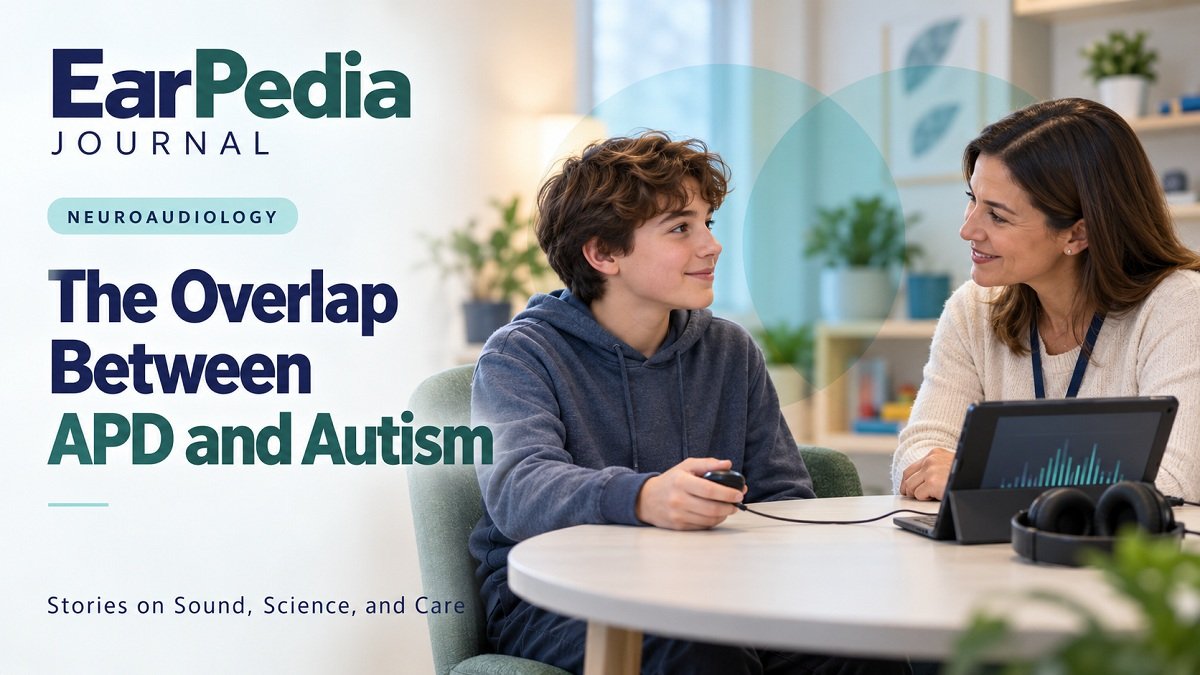
The Overlap Between APD and Autism
Introduction
The association between auditory processing disorder (APD) and autism is intricate and multifarious. A multitude of overlapping symptoms can complicate both diagnosis and treatments, including:
-
Difficulties in processing verbal information
-
Challenges functioning in noisy environments
-
Delayed responses to auditory stimuli
-
Difficulties with social communication
Studies investigating the co-occurrence of Antisocial Personality Disorder with autism have yielded inconsistent results. Certain studies indicate a greater prevalence of APD among autistic individuals than in the general population; however, the exact nature of this correlation is still being explored.
Diagnosing Auditory Processing Disorder in individuals with autism poses unique obstacles. The symptom overlap complicates the differentiation between auditory processing impairments arising from APD, autism, or a combination of both conditions.
Furthermore, the communicative and behavioral traits linked to autism can hinder the application of conventional APD diagnostic methods.
Certain researchers have suggested possible common brain pathways linking APD and autism, including:
-
Atypical neural connectivity within auditory processing regions
-
Differences in how the brain filters and prioritizes auditory information
-
Altered timing and synchronization of neural responses to auditory input
A comprehensive understanding of these potential shared pathways may facilitate the creation of more targeted interventions and customized support measures for those affected by both illnesses.
Verbal Processing Challenges in Autism
Verbal processing difficulties are a prevalent trait of autism spectrum disorder (ASD), particularly in individuals with high-functioning autism. These impairments can profoundly impact social interaction and communication, frequently intersecting with auditory processing difficulties.
Essential elements of verbal processing difficulties in autism encompass:
-
Difficulty processing rapid speech
-
Challenges understanding abstract or figurative language
-
Difficulties with prosody, including the rhythm, stress, and intonation of speech
-
Difficulty integrating verbal information with other sensory inputs
The interplay between verbal processing and auditory processing in autism is intricate and profoundly linked. Auditory processing pertains to the brain’s perception and interpretation of sounds, while verbal processing involves the understanding and creation of language.
In individuals with autism, issues in one area might exacerbate challenges in another.
An autistic person with auditory processing challenges may encounter it difficult to differentiate between similar speech sounds, impeding their capacity to understand and engage in verbal conversation.
Conversely, deficiencies in verbal processing may hinder the ability to extract meaning from auditory stimuli, despite largely intact basic auditory perception.
Various interventions can facilitate the enhancement of verbal processing abilities in individuals with autism, including:
-
Slowing speech and using clear, concise language
-
Providing visual supports to reinforce verbal information
-
Breaking complex instructions into smaller, manageable steps
-
Allowing additional processing time for verbal responses
-
Using social stories and role-playing to practice communication skills
Selective hearing in autism is occasionally misinterpreted as auditory processing deficits. Selective hearing pertains to focusing on some auditory stimuli while disregarding others, whereas auditory processing disorder (APD) impacts the overall ability to comprehend auditory information.
Understanding this distinction can facilitate the creation of more accurate and efficacious therapies.
Electrophysiological Studies
Mismatch Negativity (MMN) in Autism
Most studies examining central auditory processing abnormalities (CAPDs) in individuals with autism spectrum disorder (ASD) have utilized electrophysiological methods, including mismatch negativity (MMN) and P300 wave assessments.
MMN signifies the brain’s involuntary reaction to an anomalous stimulus—such as a variation in intensity, frequency, or duration—integrated within a series of repeating auditory signals.
Due to its reflection of pre-attentive auditory change detection, MMN serves as an effective metric for investigating early brain processing.
Research comparing 11 children with ASD to 11 typically developing peers revealed significantly diminished MMN responses in the ASD group for both genuine words and pseudowords, indicating impairments in frontal brain areas associated with auditory discrimination.
Other researchers have similarly documented diminished or modified MMN responses in school-aged children with ASD, thereby strengthening the notion that auditory change detection is impaired at a pre-attentive level.
Vlaskamp and colleagues conducted a comprehensive study that revealed diminished MMN amplitudes alongside markedly elevated P3a amplitudes in children with ASD.
Numerous investigations have recorded diminished MMN latencies and decreased amplitudes across diverse aberrant stimulus categories.
P300 and Event-Related Potentials in Autism
The P300, a subsequent positive component of event-related potentials (ERPs), generally manifests approximately 300 ms following stimulus presentation and is linked to attention, stimulus assessment, and cognitive processing.
The measurement typically employs the “oddball” paradigm, which introduces occasional target sounds amidst frequent non-target stimuli.
Altered P300 amplitudes and latencies have been consistently shown in various neurodevelopmental and neuropsychiatric disorders.
A recent meta-analysis of 32 studies, comparing 407 persons with ASD to 457 typically developing controls, revealed significant abnormalities in the P300 component among ASD participants.
Ishikawa and colleagues proposed that autistic features may affect P300 responses to unforeseen stimuli, possibly indicating diminished access to contextual information during auditory processing.
Speech Perception and Expression in Autistic Individuals
Speech Perception and Multisensory Integration
Communication and language abnormalities are fundamental characteristics of ASD, with multiple studies documenting difficulties in speech perception among affected individuals.
These challenges are often regarded as components of a more extensive sensory integration issue.
A persuasive argument is that problems in speech perception partially stem from a diminished capacity to integrate auditory and visual information.
Tryfon et al. indicated that impaired multisensory integration in autistic children—specifically the synchronization of visual signals like lip movements with auditory speech—impedes speech comprehension, particularly in noisy settings where visual cues are generally advantageous.
Speech Expression and Neural Connectivity
While speech perception has garnered significant interest, there is a paucity of studies investigating speech expression in individuals with ASD.
Recent data indicates that expressive speech difficulties may constitute a fundamental deficit.
Newborns at elevated risk for autism exhibit a reduced frequency of speech-like vocalizations and simpler syllabic patterns in comparison to neurotypical newborns.
Neurobiological research offers additional understanding.
Peeva and associates examined the left ventral premotor cortex (vPMC), a region crucial for speech motor planning, which is interconnected with the supplementary motor area (SMA), ventral motor cortex, and posterior superior temporal gyrus.
Their findings indicated diminished connection between the vPMC and SMA in people with ASD, implying abnormalities in the neural networks governing speech production.
Cochlear Implantation and Speech Assessment in Autism
Cochlear implantation can aid hearing rehabilitation in autistic individuals with profound sensorineural hearing loss; however, outcomes differ due to the intricate interplay of ASD and hearing impairment.
Eshraghi and associates presented specific assessment instruments for evaluating speech perception and expression in autistic cochlear implant recipients, contending that traditional assessments fail to appropriately reflect the distinctive characteristics of this demographic.
The newly developed caregiver-based scales provide more precise and realistic monitoring of communication advancement over time.
Difficulties in speech perception in autistic individuals may be associated with CAPDs; however, uncertainties persist about speech expression.
Diagnosis and Treatment Approaches
Multidisciplinary Assessment of APD and Autism
Diagnosing auditory processing disorder (APD) in individuals with autism necessitates a thorough, multidisciplinary methodology.
The diagnostic procedure generally encompasses the following:
-
Audiological evaluation to rule out peripheral hearing loss
-
Specialized APD assessments, which may need to be adapted to accommodate the behavioral and communication profiles of autistic individuals
-
Speech and language evaluations
-
Cognitive and behavioral assessments
-
Input from educators and caregivers regarding the individual’s functional performance in daily environments
A multidisciplinary team, often comprising audiologists, speech-language pathologists, psychologists, and occupational therapists, is crucial for performing a comprehensive assessment and formulating an effective intervention strategy.
Intervention Strategies and Assistive Technologies
Interventions for persons with co-occurring Auditory Processing Disorder and autism must be customized to their distinct strengths and requirements.
Prevalent methodologies encompass:
-
Auditory training programs designed to enhance sound discrimination and auditory processing
-
Speech and language therapy to support expressive and receptive communication
-
Cognitive-behavioral interventions to help individuals develop coping and self-regulation strategies
-
Social skills training to address communication challenges across social contexts
Assistive technologies and environmental modifications are essential in aiding individuals with both Auditory Processing Disorder and autism.
These may encompass:
-
FM systems or personal amplification devices to improve the signal-to-noise ratio
-
Noise-cancelling headphones to reduce auditory distractions
-
Visual schedules and prompts to supplement verbal instructions
-
Text-to-speech and speech-to-text software to support academic and vocational tasks
Timely intervention is essential for resolving both Auditory Processing Disorder and autism.
The growing brain’s increased adaptability allows for early support to yield significant enhancements in auditory processing and communication abilities.
It is essential to acknowledge that continuous support and adaptation methods may be required throughout the individual’s life.
Conclusion
The association between high-functioning autism and auditory processing disorder (APD) is intricate and multifarious.
While these disorders present similar issues, they also interact uniquely, requiring meticulous analysis and tailored strategies for assessment and response.
Comprehending the intricacies of this relationship is crucial for multiple reasons:
-
It enables more accurate diagnoses and the development of targeted interventions.
-
It helps individuals and families better understand and navigate the difficulties they encounter.
-
It informs research efforts and contributes to the creation of more effective support strategies.
As research advances in examining the relationships between high-functioning autism and sensory processing disorders, especially auditory processing disorder (APD), it is crucial to keep an open and curious mindset.
Additional inquiry is required to elucidate the fundamental mechanisms and enhance intervention strategies.
For individuals managing the intricacies of high-functioning autism and auditory processing disorders, information can be empowering.
A comprehensive understanding of the distinct strengths and challenges related to these disorders empowers individuals and their families to advocate for suitable support and to acquire resources that can significantly improve quality of life.
It is essential to acknowledge that, despite the challenges posed by these diseases, numerous persons with high-functioning autism and auditory processing disorder enjoy full and successful lives.
By emphasizing strengths, providing customized support, and cultivating a more inclusive and educated society, we may establish circumstances where neurodiversity is esteemed and individuals with autism and APD can flourish.
Going forward, sustained initiatives to enhance awareness, promote research, and provide individuals and families with valuable knowledge and tools will be crucial in addressing the complexities of high-functioning autism and auditory processing disorder.

Discussion
0 Comments
No comments yet
Start the discussion with a question, reflection, or clinical perspective.
Leave a reply
Share a thoughtful response or ask a question about this article.